Charles Hortenstine, PA-C
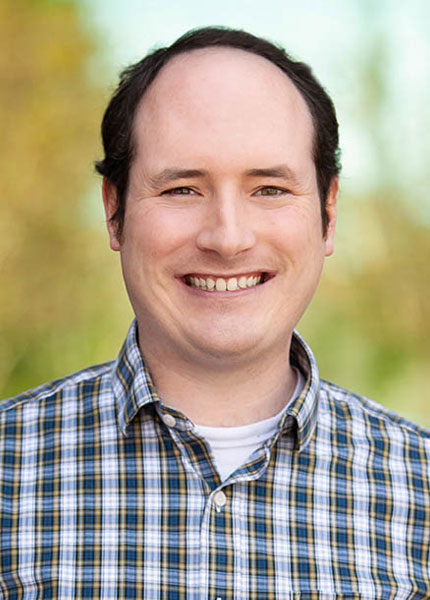
Charles Hortenstine is a physician assistant who joined the Piedmont Cancer Institute team in 2020 after completing his training with PCI in 2019.
During his master's coursework, Charles's elective rotations were in oncology. He has a passion for cancer care and particularly enjoys seeing new patients. He finds the most fulfillment working with new patients - helping them feel comfortable, building trust, and demystifying cancer and cancer treatment.
Charles is married, and his family includes three dogs. He enjoys going for walks, baking, and tending to their family's growing collection of unusual house plants.
About Me: Q&A
Why Oncology?
Interestingly, I first came to oncology by chance. I signed up for a rotation with Dr. Feinstein while I was finishing up PA school in 2019. I was moving back to Georgia, I needed to arrange for a rotation in this area, and I knew one of the nurses that works here. Initially, I thought it would be an interesting and convenient rotation while I prepared to look for jobs in Georgia. However, I quickly found that oncology is a special field. Oncology offers a chance to develop deeper relationships than are possible in other specialties. Few other fields involve seeing patients as frequently as we get to here, and I saw how the nature of this specialty allowed Dr. Feinstein and our staff to become a part of patients' lives. I saw that in this field, I would be able to truly get to know patients and help them navigate some of the greatest challenges that they would ever face. In short, it was everything I was looking for when I first chose to become a PA. The choice to stay on after I graduated was an easy one.
What is the best part of your job?
Though few things can rival the highs being with someone as they complete their last round of chemotherapy or explaining excellent scan results, participating in patients' first visits here is the best part of my job. These visits are often challenging. Having to navigate previous medical records, summarize complicated medical concepts, and sometimes deliver bad news is not easy. However, the effort that goes into surmounting these challenges is more than made up for by the satisfaction of untangling a complicated medical past, demystifying a frightening diagnosis, and being able to tell someone that something can be done and that we have a plan. For me, nothing beats that moment at the end of many peoples' first visits when they tell me that they already feel better, even though all we did was talk.
What is it like working with Dr. Bender?
Working with Dr. Bender has been a privilege. His medical knowledge, bedside manner, and cool demeanor leave little room for improvement and with his meticulous note keeping and encyclopedic knowledge of his patients' health, I always know exactly where we stand with each patient's fight against cancer. He is always available for questions and eager to share his knowledge whenever I am seeing something for the first time. I could not have asked for a better supervising physician for my introduction to this field. It's not all business though. He has many interests and his drive to share knowledge is not limited to medicine alone. I never know when I may receive an impromptu lecture on the proper way to make and store guacamole, the origin of shelf-stable macaroni and cheese, and the political history of the Philippines (yes, those all actually happened). That paired with his keen sense of humor help add some much needed levity to an otherwise pretty serious workplace.